
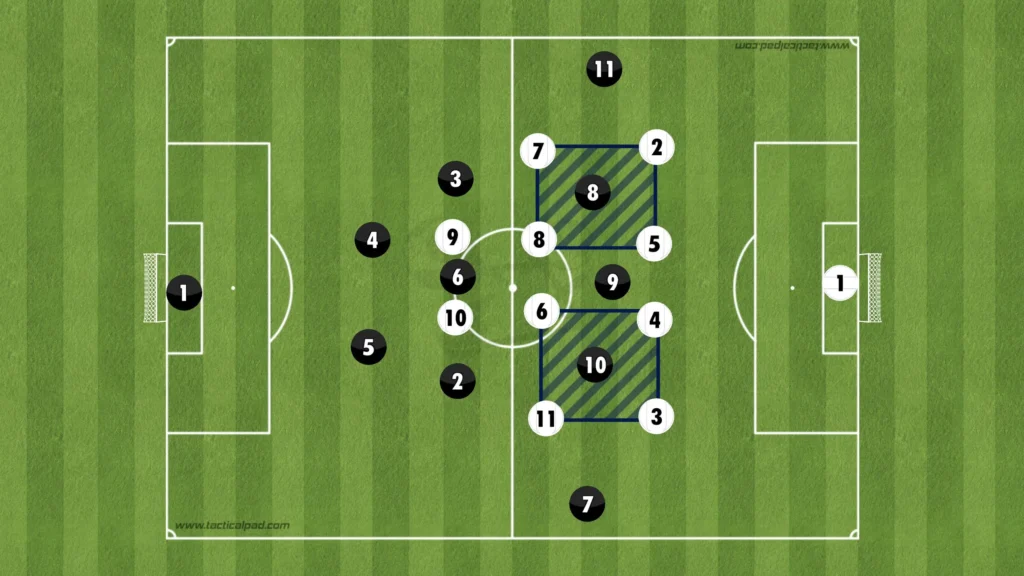
Football is often described as “the beautiful game,” yet beneath its aesthetic appeal lies a sophisticated science of strategy, structure, and decision-making. Understanding football is more than appreciating spectacular goals or brilliant dribbles; it involves recognizing how teams organize themselves on the pitch. That’s why a deep grasp of Tactical Formations Explained Simply is crucial—not just for players and coaches, but for fans who want to truly comprehend the nuances of the sport.
Over decades of watching football at the highest level, attending matches, and analyzing coaching philosophies, I’ve seen how formations can dictate the rhythm of a game, control possession, and even psychologically influence opponents. In this article, we’ll break down the most important football formations, explain their strategic purposes, and illustrate how they are applied in modern football. By the end, even casual viewers will have a clear understanding of why formations matter and how they shape the game.
What Are Tactical Formations and Why Do They Matter?
At its core, a football formation is the arrangement of players on the pitch. While the rules mandate eleven players per team, formations determine where each player operates, how the team balances defense and attack, and how players interact both on and off the ball.
Tactical formations are far more than numbers—they are frameworks that communicate a coach’s philosophy. For instance, a 4-4-2 emphasizes balance and simplicity, whereas a 3-4-3 promotes width, high pressing, and offensive flexibility. Understanding formations helps fans appreciate why a team dominates possession in one match or struggles defensively in another.
Formations also affect player roles. A striker in a 4-2-3-1 may have different responsibilities than in a 4-4-2, and a full-back in a 3-5-2 may push higher to provide width. Recognizing these subtleties is the essence of understanding Tactical Formations Explained Simply.
The Classic 4-4-2 Formation
Historically, the 4-4-2 has been the most recognized and widely used formation in football. It consists of four defenders, four midfielders, and two strikers. Its strength lies in balance, simplicity, and defensive solidity.
The back four offers a clear defensive line, while the midfield four allows for both attacking support and defensive coverage. The two forwards are tasked with creating scoring opportunities and applying pressure on the opponent’s defenders. The 4-4-2 is especially effective for teams emphasizing quick transitions, wide play, and compact midfield structure.
Many legendary teams, such as Sir Alex Ferguson’s Manchester United sides, leveraged this formation to great effect. While some modern coaches view it as outdated, the principles of width, balance, and partnership between midfield and attack remain timeless.
The Defensive Power of 4-2-3-1
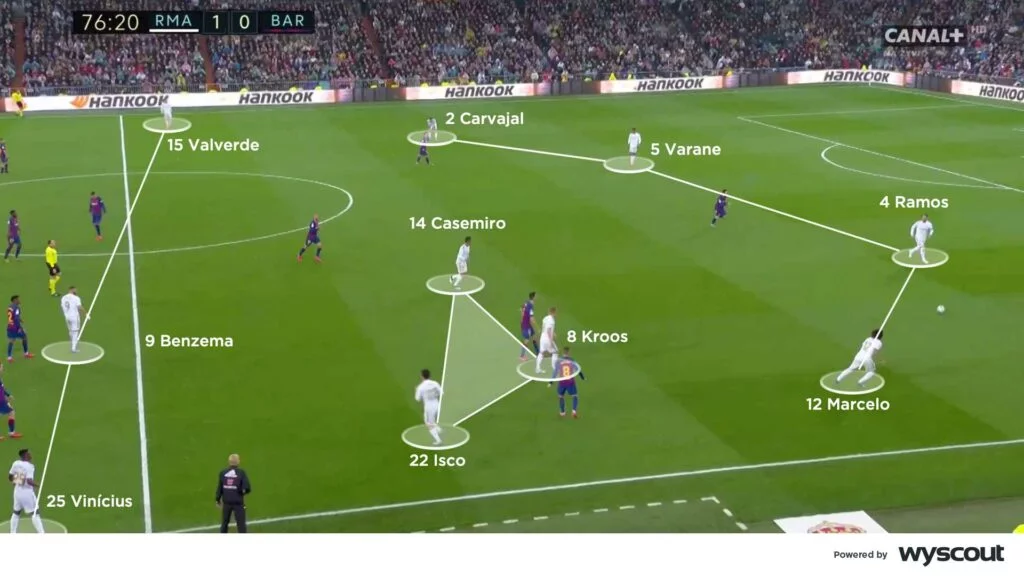
One of the most popular formations in contemporary football is the 4-2-3-1, which builds on the defensive solidity of a back four while providing a flexible attacking structure. Two holding midfielders protect the defense, three attacking midfielders support a lone striker, and full-backs often overlap to add width.
This formation is ideal for controlling possession, pressing opponents effectively, and transitioning quickly from defense to attack. For example, teams like Real Madrid and Bayern Munich frequently utilize 4-2-3-1, adjusting the roles of their wide midfielders and attacking midfielder based on opposition weaknesses.
The strength of the 4-2-3-1 lies in its adaptability. A team can shift from a defensive 4-2-3-1 to a more attacking variant without changing personnel, simply by adjusting positioning and movement. Understanding this formation allows fans to see why some teams dominate games even without overwhelming possession statistics.
The Modern 4-3-3 Formation
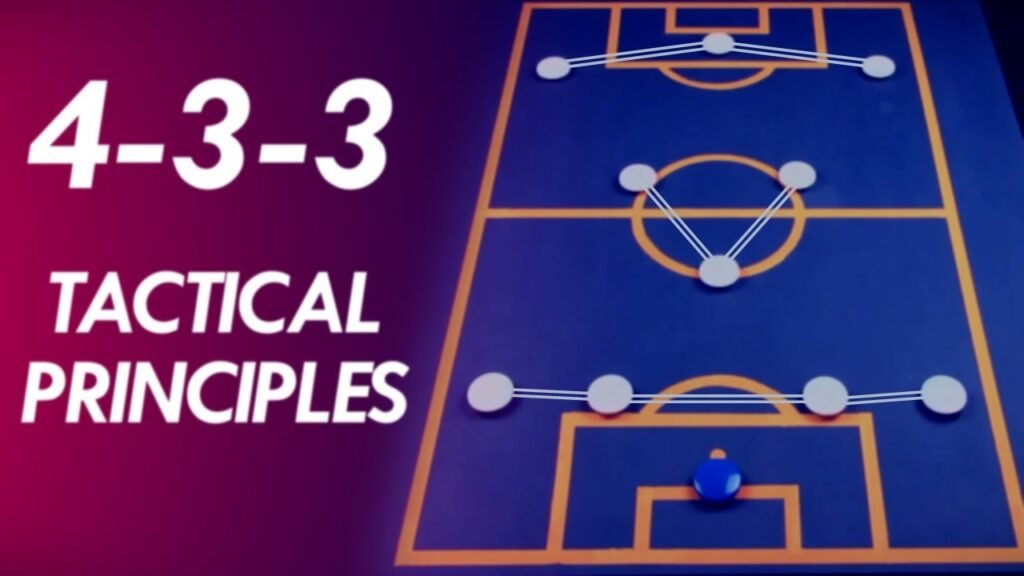
The 4-3-3 formation has become a hallmark of modern attacking football. With four defenders, three central midfielders, and three forwards, it prioritizes width, pressing, and fluidity.
In this formation, the midfield triangle often consists of a defensive midfielder and two central midfielders who support both attack and defense. The three forwards—typically a central striker and two wingers—create width and stretch defenses, opening space for midfielders to exploit.
Teams like Liverpool F.C. under Jürgen Klopp use 4-3-3 to execute high pressing and fast transitions. Observing this formation in action helps fans appreciate the coordination required between forwards, midfielders, and full-backs. The 4-3-3 is especially effective against teams playing narrow formations, as it forces defenders to cover wider spaces and creates gaps in central areas.
Three at the Back: 3-5-2 and 3-4-3
Defensive and attacking strategies have evolved, giving rise to formations with three central defenders. The 3-5-2 and 3-4-3 are prime examples.
The 3-5-2 allows teams to field three central defenders, five midfielders—often including wing-backs—and two strikers. This formation provides defensive stability while maintaining attacking width. Wing-backs are crucial, as they must cover the flanks both offensively and defensively. Italy’s national teams have historically excelled with 3-5-2, blending tactical discipline with opportunistic attacking play.
The 3-4-3, on the other hand, emphasizes offense. Three forwards stretch the opponent’s defense, while midfielders maintain control in central areas. Teams like Chelsea under Antonio Conte used 3-4-3 effectively to dominate possession, press aggressively, and exploit wide areas. Both formations illustrate how Tactical Formations Explained Simply is about more than numbers—it’s about the roles, responsibilities, and movement patterns that bring these systems to life.
The Evolution of 4-1-4-1
The 4-1-4-1 is a tactical evolution emphasizing midfield control. It consists of four defenders, one holding midfielder, four midfielders in a line, and a lone striker. This formation allows teams to dominate central spaces while remaining defensively compact.
The single defensive midfielder acts as a pivot, breaking up attacks and initiating transitions. The front four midfielders provide width, creativity, and support to the striker. Teams like Manchester City under Pep Guardiola employ this formation to maximize possession dominance, pressing efficiency, and attacking flexibility.
Understanding the 4-1-4-1 helps fans recognize how seemingly small positional adjustments can drastically influence ball circulation, defensive cover, and attacking options.
When and Why Coaches Change Formations
Tactical formations are dynamic, not static. Coaches often adjust formations mid-game to exploit weaknesses, counter opposition strengths, or manage game tempo. For example, a team leading late in a match may shift from 4-3-3 to 4-5-1, adding midfield solidity to protect a lead. Conversely, teams needing a goal might move from 4-2-3-1 to 3-4-3, adding offensive players and pressing higher up the pitch.
Recognizing these changes allows fans to understand in-game strategy beyond raw statistics. It also underscores why formations are integral to both attacking and defensive identity, influencing not just where players stand but how they think, move, and interact.
Read Also: Greatest Football Comebacks Ever
Common Misconceptions About Formations
Many casual fans misunderstand formations as rigid structures. In reality, formations provide a framework, but modern football emphasizes fluidity. Players often switch positions during games, and formations morph depending on possession, opposition shape, and tactical intent.
Another misconception is that more attacking players always lead to greater offensive potential. Without proper balance and defensive cover, overloaded attacking formations can be vulnerable to counter-attacks. Tactical Formations Explained Simply requires understanding these nuances—numbers alone do not guarantee success.
Iconic Teams and Their Formations
Studying legendary teams provides practical insight into how formations shape results:
- Barcelona under Pep Guardiola used 4-3-3 with high pressing and positional rotation, revolutionizing modern football.
- Italy national football team often utilized 3-5-2 to balance defensive discipline with counter-attacking opportunities.
- Liverpool F.C. uses a flexible 4-3-3, emphasizing transitions, high pressing, and wide attacks.
Analyzing these teams demonstrates that formations are not just tactical decisions—they reflect club philosophy, player strengths, and strategic identity.
How Fans Can Use Formation Knowledge
Understanding tactical formations enhances the viewing experience. Fans can anticipate movements, appreciate player roles, and grasp why certain plays succeed or fail. Knowledge of formations also allows deeper appreciation of coaching decisions, substitutions, and tactical adjustments during matches.
For analysts, commentators, and football enthusiasts, mastering formations provides a framework for predicting outcomes and understanding match narratives. It transforms watching football from passive enjoyment to an immersive analytical experience.
Conclusion
Tactical Formations Explained Simply reveals that football is as much about structure, strategy, and movement as it is about skill and flair. From the classic 4-4-2 to the modern 4-3-3, from three-at-the-back systems to the nuanced 4-1-4-1, formations are the backbone of team identity. They dictate how teams defend, attack, transition, and control the rhythm of a game.
For players, formations define roles and responsibilities. For coaches, they are strategic tools to exploit opposition weaknesses. For fans, understanding formations unlocks a deeper layer of appreciation, transforming matches into a study of human coordination, decision-making, and creativity.
Ultimately, tactical formations are living frameworks. They evolve, adapt, and respond to the changing demands of the game. By grasping these systems, we not only enhance our understanding of football but also recognize the brilliance behind every coordinated run, defensive block, and attacking movement. Formations are the silent architects of the beautiful game, and understanding them allows every fan to witness football with insight, clarity, and deeper enjoyment.
Find more helpful guides on Crunchy Greens at tophillsportcom.