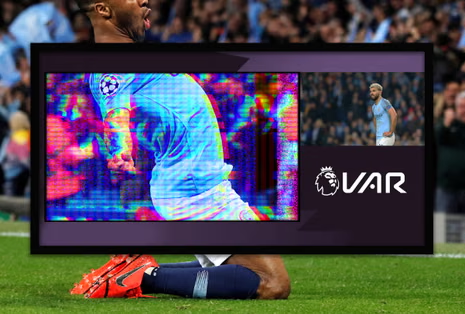
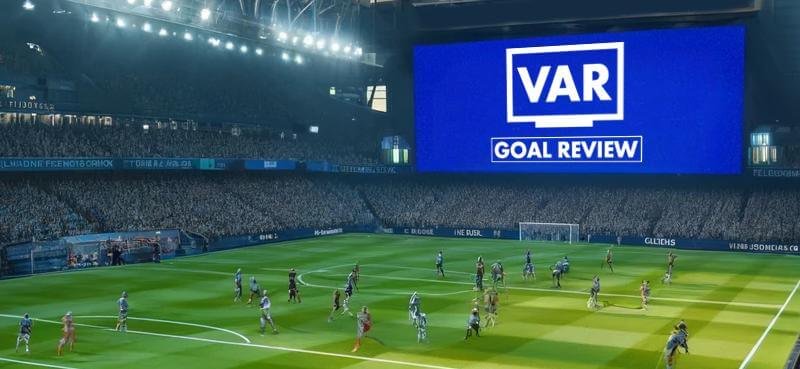
I still remember the first time I watched a goal celebration freeze mid-roar because of a referee’s hand pressed against his ear. The stadium, seconds earlier vibrating with noise, fell into an anxious hush. Players surrounded the official. Fans checked giant screens. Social media exploded. That moment captured, in real time, how VAR changed football.
As someone who has followed the game closely for more than two decades—through domestic leagues, European competitions, and international tournaments—I’ve witnessed football evolve tactically, physically, and commercially. But few innovations have reshaped the sport’s rhythm, psychology, and governance as dramatically as the Video Assistant Referee system.
In this comprehensive analysis, I’ll explore how VAR changed football from multiple angles: decision-making accuracy, referee authority, tactical adjustments, player behavior, fan experience, and the broader debate around fairness versus flow. This isn’t just about controversial offside calls. It’s about how technology fundamentally altered the game’s ecosystem.
The Origins: Why VAR Was Introduced
To understand how VAR changed football, we need to revisit why it was implemented in the first place. For decades, referees operated without technological support, relying entirely on their positioning and assistants. Human error was inevitable. High-profile mistakes in major tournaments often overshadowed matches themselves.
The governing body behind global football, FIFA, began exploring technological solutions after mounting pressure from clubs, players, and fans. Domestic competitions such as the English Premier League and tournaments like the FIFA World Cup became testing grounds for innovation.
Before VAR, we had goal-line technology, which answered a binary question: did the ball cross the line? That was straightforward. VAR, however, entered far murkier territory—subjective fouls, marginal offsides, handballs. It wasn’t simply adding technology. It was redefining authority.
How VAR Changed Football Decision-Making
The most immediate impact of VAR was on refereeing accuracy. Offside decisions became measured down to millimeters. Penalty calls were reexamined from multiple angles. Red card incidents were scrutinized frame by frame.
On paper, this improved fairness. Statistical analyses across major leagues suggest a measurable increase in correct key decisions after VAR implementation. But precision came with consequences.
Matches slowed. Spontaneous momentum paused. Referees shifted from sole arbiters to part of a larger officiating network communicating through earpieces and monitors. In critical matches in the UEFA Champions League, decisions once final became provisional until confirmed.
As a viewer, I noticed a psychological shift. Celebrations were tempered. Players looked toward the referee before fully committing to joy. The human instinct to react instantly was replaced by cautious anticipation.
Accuracy improved, but emotional immediacy changed.
How VAR Changed Football Tactics
One of the less discussed dimensions of how VAR changed football lies in tactical behavior. Teams quickly adapted.
Defenders became more cautious inside the penalty area. Shirt pulls, subtle nudges, and off-the-ball grappling—once difficult to detect—now risk retrospective punishment. Coaches began instructing defenders to keep hands visibly behind their backs to avoid handball reviews.
Attackers, conversely, adjusted positioning. Forwards now hold runs more precisely, aware that offside lines will be drawn digitally. Marginal timing errors are no longer forgiven.
Set-piece strategies evolved as well. With increased scrutiny, teams refined blocking movements and marking schemes to avoid VAR interventions. The game became more technically disciplined in micro-moments.
From a coaching perspective, VAR introduced accountability into areas previously governed by interpretation.
Psychological Effects on Players and Referees
The psychological dimension is profound. Players now operate under the knowledge that nearly every decisive moment can be replayed repeatedly from multiple angles.
This has two effects. First, it discourages blatant misconduct. Simulation, violent conduct, and deliberate fouls carry higher risk. Second, it increases tension. A marginal touch in the box can trigger prolonged uncertainty.
Referees themselves face a new dynamic. Previously, authority was centralized. Now, decisions can be corrected publicly. While this enhances fairness, it subtly alters perception of control.
In my experience watching high-pressure matches, particularly in knockout competitions, VAR reviews heighten drama but also introduce anxiety. Silence during a review can feel longer than the preceding 90 minutes.
How VAR Changed Football for Fans
Few aspects of how VAR changed football are as visible as its effect on fan experience.
In-stadium supporters often lack immediate clarity during reviews. Television audiences benefit from replays and graphics, but stadium spectators sometimes wait in confusion. This disconnect has been a recurring criticism.
Yet fans also appreciate corrected injustices. When a wrongly disallowed goal is awarded after review, fairness feels vindicated.
The tension between flow and justice defines the modern viewing experience. Some argue football’s organic rhythm has been compromised. Others insist accuracy outweighs aesthetic disruption.
Personally, I’ve felt both. I’ve celebrated corrected calls and also missed the uninhibited chaos of pre-VAR celebrations.
Controversies and Criticisms
No discussion of how VAR changed football would be complete without acknowledging controversy.
Marginal offside calls—decided by a toe or shoulder—spark debate about whether technology has exceeded common-sense interpretation. Handball rules, in particular, have faced confusion as law revisions attempt to align with technological scrutiny.
Critics argue that football’s subjectivity cannot be fully digitized. Supporters counter that ignoring clear evidence is unjust in a multi-billion-dollar sport.
Major competitions overseen by UEFA have continually adjusted protocols, emphasizing “clear and obvious errors” to prevent overreach. The interpretation threshold remains central to VAR’s effectiveness.
The system is evolving, not static.
Fairness vs. Flow: The Core Debate
At its heart, how VAR changed football revolves around a philosophical question: should football prioritize uninterrupted flow or maximum accuracy?
Traditionalists argue that human error is intrinsic to sport. Debates fueled pub conversations and rivalries. Technology, they claim, sterilizes unpredictability.
Reformists argue that professional football, with immense financial stakes, demands fairness. Careers and championships hinge on single moments.
From an analytical standpoint, both sides hold valid points. Football’s charm lies partly in imperfection. Yet blatant injustice undermines credibility.
The sport continues balancing these competing values.
Read Also: Tactical Formations Explained Simply
Statistical Impact Since Implementation
Across elite competitions, penalty awards increased after VAR introduction due to retrospective foul detection. Offside accuracy improved dramatically. Red card reviews reduced mistaken dismissals.
Data suggests overall key decision correctness rose significantly in leagues that implemented VAR consistently. While not flawless, the margin of error narrowed.
However, match duration also increased slightly due to review time. Though average delays may seem minor statistically, emotionally they feel substantial.
How VAR Changed Football Culture
Beyond tactics and statistics, VAR altered football culture. Phrases like “check complete” and “onside by a millimeter” entered everyday vocabulary.
Broadcast presentations adapted with animated lines and freeze frames. Social media debates intensified, with screenshots dissected instantly worldwide.
Young fans now grow up expecting technological assistance as normal. For them, pre-VAR football may seem archaic.
Cultural shifts often feel uncomfortable during transition but normalize over time.
Has VAR Achieved Its Goal?
If the goal was to eliminate clear injustice, VAR has largely succeeded. Iconic wrong decisions—like disallowed legitimate goals in past tournaments—are less likely today.
Yet perfection remains elusive. Interpretation still varies. Referees remain human.
In my observation, VAR has made football more accountable but also more complex. It has raised expectations of consistency that may be impossible to fully satisfy.
The Future of VAR
Technology will likely refine further. Semi-automated offside systems already accelerate decisions in elite competitions. Communication transparency may improve, potentially allowing referees to explain decisions live.
The evolution of how VAR changed football is ongoing. Governance bodies continuously tweak protocols to reduce friction and enhance clarity.
As artificial intelligence and data integration advance, officiating could become faster and more precise. The challenge will remain preserving football’s emotional essence.
Final Thoughts on How VAR Changed Football
How VAR changed football cannot be summarized in a single verdict of success or failure. It reshaped decision-making, tactics, psychology, and fan engagement.
It reduced glaring errors and increased fairness in high-stakes environments. It also disrupted spontaneity and intensified scrutiny.
As someone who has experienced both eras—before and after VAR—I believe the system represents a necessary evolution, albeit imperfect. Football at its highest level demands integrity. Technology, when applied carefully, supports that aim.
Yet the sport’s heartbeat must remain intact. The roar of the crowd, the immediacy of celebration, the unpredictable surge of momentum—these define football’s soul.
The challenge for governing bodies moving forward is simple but delicate: refine technology without eroding emotion.
Because in the end, football is not just about correct decisions. It’s about unforgettable moments.
Find more helpful guides on Crunchy Greens at tophillsportcom.