
Cricket rivalries are never just about runs and wickets. They are about history, pride, politics, identity, and emotion layered over decades of competition. Having followed international cricket closely for more than twenty years—through packed stadiums, tense television broadcasts, and countless post-match debates—I’ve come to believe that rivalries are the true heartbeat of the sport.
Statistics may tell us who scored more centuries or took more wickets, but rivalries tell us who carried the weight of a nation, who thrived under hostile crowds, and which contests shaped cricket’s legacy.
In this in-depth exploration of the 3. Greatest Cricket Rivalries in History, I’ll examine not just the headline matches but the deeper cultural, historical, and sporting contexts that make these battles timeless. This isn’t a superficial ranking; it’s an expert-level analysis grounded in cricket history, tactical evolution, and lived fan experience.
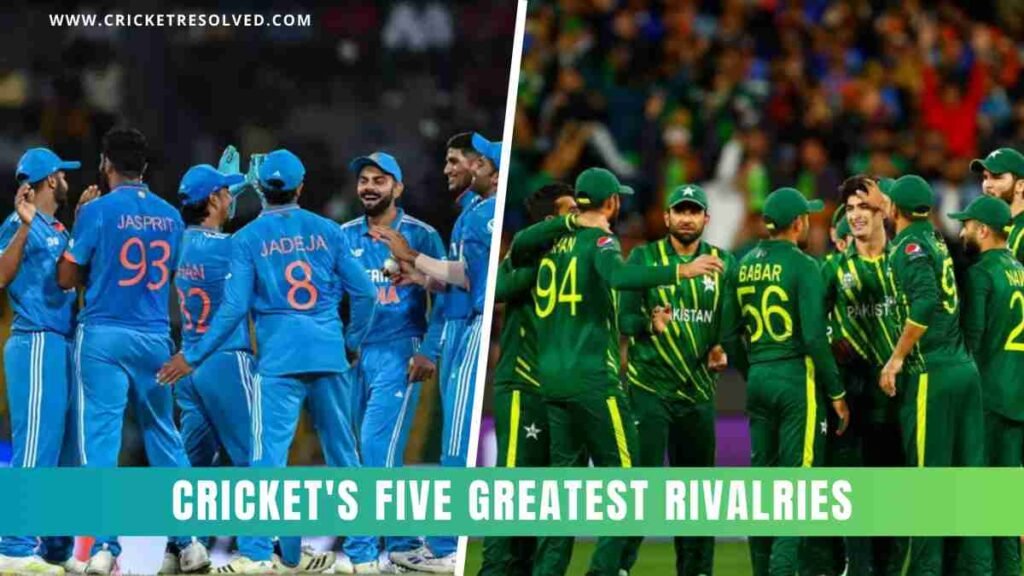
India vs Pakistan – The Most Intense Cricket Rivalry Ever
When discussing the 3. Greatest Cricket Rivalries in History, the contest between India national cricket team and Pakistan national cricket team inevitably dominates the conversation.
This rivalry transcends sport. Rooted in the subcontinent’s partition in 1947, every encounter carries political undertones, emotional intensity, and extraordinary global attention. Unlike other rivalries that play out annually, India and Pakistan often meet only in ICC tournaments, which amplifies the anticipation.
From a cricketing standpoint, the contests have produced unforgettable World Cup clashes. The group-stage thriller in the 2003 Cricket World Cup, where Sachin Tendulkar’s audacious upper cut off Shoaib Akhtar set the tone, remains one of the most watched matches in cricket history. Decades later, the drama continued in the 2022 ICC Men’s T20 World Cup, where Virat Kohli’s masterclass under pressure reignited the rivalry for a new generation.
What makes this rivalry unique is its psychological intensity. The margin for error is razor thin because players carry not only personal expectations but national sentiment. Even bilateral series in neutral venues draw staggering television audiences.
Tactically, these matches often swing on composure. Bowling attacks are sharpened by emotion. Batters must navigate not only skillful opponents but overwhelming atmosphere. As someone who has watched these games unfold live, I can attest that no other cricket contest feels as emotionally charged from the first ball to the last.
This rivalry represents cricket at its most passionate and volatile.
The Ashes – England vs Australia: Cricket’s Oldest Battlefield
If India vs Pakistan is cricket’s emotional epicenter, then The Ashes is its historical backbone. The rivalry between England national cricket team and Australia national cricket team dates back to 1882 and remains the sport’s most storied contest.
The Ashes were born after Australia defeated England at The Oval, prompting a satirical obituary declaring English cricket had died. Since then, the urn has symbolized over a century of competition shaped by empire, pride, and sporting excellence.
What distinguishes this rivalry among the 3. Greatest Cricket Rivalries in History is its longevity and evolution. It has survived world wars, format changes, and generational transitions.
The 2005 Ashes series stands as a modern pinnacle. Matches were decided by microscopic margins, particularly the Edgbaston Test, where England secured a two-run victory. That series reignited global interest in Test cricket and demonstrated that five-day contests could captivate modern audiences.
From a technical perspective, The Ashes has often been a laboratory for cricketing innovation. Fast bowling duels, strategic captaincy shifts, and batting masterclasses have shaped tactical thinking worldwide. Legends such as Sir Don Bradman, Ian Botham, Shane Warne, and Ricky Ponting forged their reputations in this arena.
Having followed multiple Ashes tours, I’ve observed that the rivalry thrives on adaptability. When one team dominates, the other recalibrates. Cycles of supremacy and resurgence keep the narrative alive.
The Ashes endure because they balance tradition with competitive fire, making them central to cricket’s identity.

Australia vs South Africa – The Modern Era’s Fiercest Contest
While India vs Pakistan and The Ashes draw historical and emotional weight, the rivalry between Australia national cricket team and South Africa national cricket team defines cricket’s modern competitive edge.
Emerging strongly in the late 1990s and 2000s, this contest has consistently delivered high-quality cricket across formats. It’s a rivalry built less on political history and more on competitive parity and uncompromising intensity.
The unforgettable ODI in Johannesburg in 2006, where South Africa chased down 434, remains one of the greatest matches ever played. That game wasn’t just thrilling—it symbolized the shifting power dynamics in international cricket.
In Test cricket, these two sides have produced brutal, pace-heavy encounters that test physical and mental endurance. Series between them often feel like heavyweight boxing matches—strategic, relentless, and emotionally charged.
This rivalry also illustrates how professionalism and preparation evolved in the 21st century. Fitness standards, analytics, and tactical depth are showcased at their peak when these teams meet.
What I find compelling about this rivalry is its authenticity. There’s no historical baggage required to fuel it. The cricket itself—hard, uncompromising, and elite—is enough.
Within the framework of the 3. Greatest Cricket Rivalries in History, this contest represents excellence in its purest form.
Why These Are the 3. Greatest Cricket Rivalries in History
To evaluate rivalries objectively, several factors matter: historical depth, competitive balance, cultural significance, global audience reach, and the quality of cricket produced.
India vs Pakistan leads in emotional intensity and viewership impact. The Ashes dominate in historical continuity and tradition. Australia vs South Africa exemplify modern competitiveness and elite performance standards.
Other rivalries deserve mention—India vs Australia in the Border-Gavaskar Trophy era, England vs South Africa in key World Cup encounters—but these three stand above the rest in terms of sustained global influence.
The common thread among the greatest cricket rivalries in history is narrative. Each encounter adds a chapter. Heroes rise, villains emerge, controversies spark debate, and redemption arcs unfold.
Rivalries provide context to individual brilliance. A century scored in a low-stakes bilateral series is impressive. A century scored in a high-voltage rivalry becomes legendary.
Read Also: Best Young Cricketers to Watch This Year
Tactical Evolution Within Great Cricket Rivalries
Rivalries accelerate innovation. Teams study opponents obsessively. Weaknesses are targeted. Strategies evolve quickly because familiarity breeds adaptation.
In Ashes contests, captains often employ unconventional field placements to disrupt settled batters. In India-Pakistan clashes, spin and pace combinations are tailored to exploit psychological pressure. In Australia-South Africa series, aggressive short-pitched bowling tests resilience.
These tactical layers add depth beyond the scorecard. Rivalries become chess matches played over years, not just days.
From my observation, rivalries also sharpen mental toughness. Young players learn quickly that composure under pressure distinguishes good cricketers from great ones.
Cultural Impact of Historic Cricket Rivalries
Cricket rivalries influence national conversations. They inspire films, books, documentaries, and generational storytelling. Families recall where they were during iconic matches.
Television ratings surge. Social media trends explode. Entire communities pause to watch decisive moments.
In India and Pakistan, businesses adjust working hours during major clashes. In England and Australia, Ashes summers shape sporting calendars. In South Africa, victories over Australia symbolize competitive legitimacy on the world stage.
These rivalries extend beyond cricket fields into collective memory.
The Role of ICC Tournaments in Amplifying Rivalries
Global tournaments intensify rivalries because elimination stakes magnify pressure. Encounters in events like the Cricket World Cup or T20 World Cup often carry more emotional weight than bilateral series.
Knockout matches create defining moments—last-over finishes, controversial umpiring decisions, and heroic performances that linger for decades.
Rivalries thrive in high-stakes environments, and ICC tournaments provide the perfect stage.
Final Thoughts on the 3. Greatest Cricket Rivalries in History
Cricket without rivalries would still be beautiful, but it would lack urgency. Rivalries transform matches into narratives, statistics into stories, and players into legends.
The 3. Greatest Cricket Rivalries in History—India vs Pakistan, The Ashes between England and Australia, and Australia vs South Africa—represent different dimensions of what makes the sport compelling. One embodies passion and politics. Another stands for tradition and endurance. The third exemplifies elite competitive excellence.
As a lifelong follower of the game, I’ve come to appreciate that rivalries are cricket’s emotional architecture. They give context to triumph and heartbreak. They ensure that every boundary and wicket carries meaning beyond the moment.
And long after individual records fade, the rivalries endure—renewed, reimagined, and ready for the next chapter.
Find more helpful guides on Crunchy Greens at tophillsportcom.