
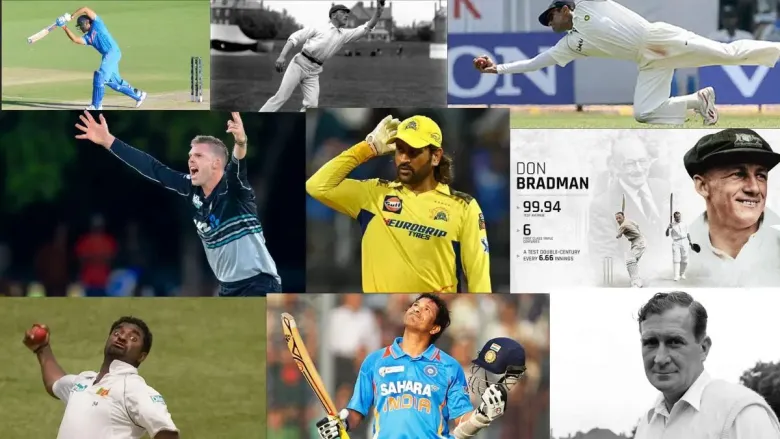
Cricket has always been a sport obsessed with numbers. From batting averages whispered in commentary boxes to strike rates debated endlessly on social media, statistics shape how we measure greatness. Yet every so often, a record emerges that feels almost untouchable—a benchmark so extraordinary that even in an era of aggressive scoring and relentless scheduling, it stands apart.
Having followed international cricket for more than two decades, I’ve witnessed records fall that once seemed immortal. I saw scoring rates in One Day Internationals skyrocket beyond what 1990s fans could imagine. I watched bowlers redefine fitness standards and batters rewrite record books. But some achievements still feel insulated from the modern game’s evolution.
In this deep, expert-level exploration of Cricket Records That May Never Break, we’ll look beyond surface-level stats and examine context, conditions, format changes, and player longevity. These are not merely impressive numbers—they are milestones shaped by unique eras, extraordinary talent, and circumstances unlikely to be replicated.
Don Bradman’s Test Average – The Statistical Everest
When discussing Cricket Records That May Never Break, the conversation inevitably begins with Don Bradman and his astonishing Test batting average of 99.94.
To put this into perspective, modern greats struggle to maintain averages above 50 in Test cricket. Bradman’s average nearly doubled that benchmark. Achieved across 52 Tests between 1928 and 1948, his consistency defies probability.
Context matters. Bradman played uncovered pitches, faced hostile bowling attacks, and endured the infamous Bodyline series. Yet even under those extreme challenges, he dominated. To reach an average of 100, he needed just four runs in his final innings. He was bowled for a duck, finishing at 99.94—a figure that somehow feels even more mythical because of its imperfection.
Given modern cricket’s packed schedules, diversified formats, and analytics-driven bowling strategies, sustaining such an average over a career appears almost impossible. Players today constantly switch between formats, affecting rhythm and technical consistency.
Bradman’s average is not just a record—it is cricket’s statistical monument.
Muttiah Muralitharan’s 800 Test Wickets – The Ultimate Bowling Benchmark
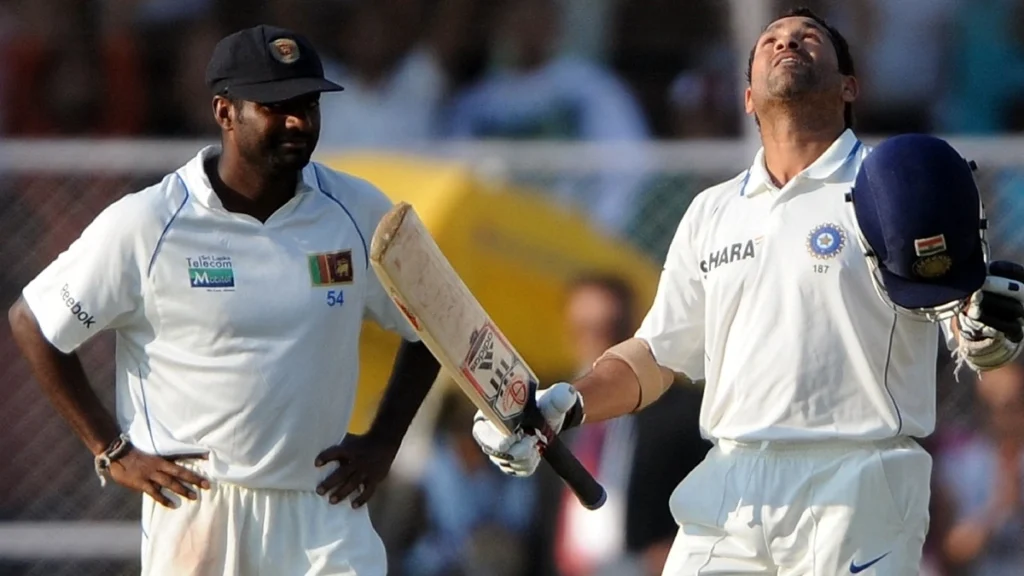
Another towering entry among Cricket Records That May Never Break belongs to Muttiah Muralitharan of the Sri Lanka national cricket team, who claimed 800 Test wickets.
Reaching even 500 Test wickets is considered a career-defining achievement. Crossing 600 places a bowler among legends. But 800? That requires extraordinary durability, consistency, and favorable scheduling.
Muralitharan combined prodigious turn, subtle variations, and relentless control. He thrived on subcontinental pitches but also adapted abroad. Crucially, he played in an era where Sri Lanka regularly contested long Test series, giving him opportunities to accumulate wickets.
Modern workload management and reduced Test series lengths make such longevity difficult. Fast bowlers face injury risks. Spinners rotate more frequently. Calendar congestion across formats limits red-ball opportunities.
It’s not that 800 wickets are mathematically impossible. It’s that the structural conditions supporting such accumulation are fading.
Sachin Tendulkar’s 100 International Centuries – A Record of Endurance
Sachin Tendulkar achieved what many once considered unreachable: 100 international centuries for the India national cricket team.
This milestone required not just skill but extraordinary longevity. Tendulkar debuted at 16 and played international cricket for 24 years. He scored centuries across formats, continents, and generations of bowlers.
Modern cricketers face intense physical demands and tighter rotation policies. Multi-format players often rest during bilateral series. Moreover, T20 cricket’s rise has reduced emphasis on long-format innings where centuries are more common.
Reaching 100 international hundreds demands sustained peak performance across decades. In an era prioritizing workload balance and specialization, such a cumulative feat feels increasingly unlikely.
Jim Laker’s 19 Wickets in a Test Match
In 1956, Jim Laker took 19 wickets in a single Test match for the England national cricket team against Australia.
He claimed 9 wickets in the first innings and 10 in the second. That level of dominance in a single match is extraordinary. Even the most elite modern bowlers struggle to claim 10 wickets in a Test, let alone 19.
Today’s pitches are more standardized. Teams rotate bowlers strategically. Captains manage workloads carefully. For one bowler to claim nearly every wicket in a match requires both favorable conditions and exceptional form aligning perfectly.
It’s not just a bowling record—it’s a statistical anomaly that may stand forever.
Rohit Sharma’s 264 in an ODI – The Pinnacle of White-Ball Batting
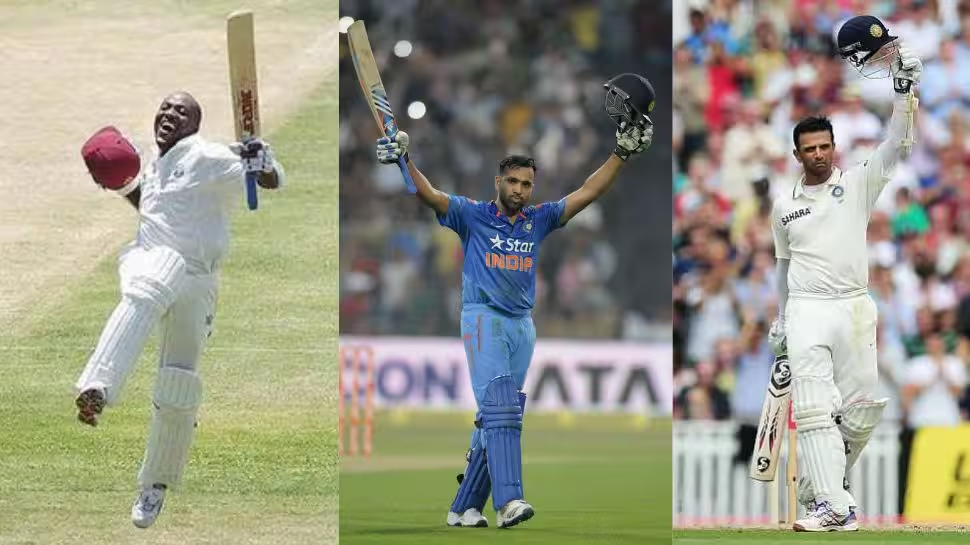
In the world of limited-overs cricket, Rohit Sharma scored 264 runs in a single One Day International, the highest individual score in ODI history.
In modern cricket, teams regularly score 350-plus totals. Yet individual double centuries remain rare. Rohit’s innings combined patience early on with devastating acceleration.
Given modern ODI strategies emphasizing balanced team contributions, opportunities to bat long enough for 250-plus scores are limited. Field restrictions and aggressive bowling changes often prevent extended domination.
While double centuries are now achievable, surpassing 264 requires near-perfect alignment of form, pitch, opposition, and match situation.
Brian Lara’s 400* in Test Cricket
Brian Lara holds the record for the highest individual Test score: 400 not out for the West Indies cricket team.
Triple centuries in Test cricket are rare. A quadruple century is extraordinary. Lara’s innings demanded immense concentration and stamina.
Modern Test cricket prioritizes results over marathon batting displays. Captains declare earlier to force outcomes. Scoring 400 today would require a combination of flat pitch, extended innings, and team strategy aligned with individual milestones.
Given time constraints and aggressive declarations, this record appears increasingly safe.
The Fastest Test Century – Brendon McCullum’s 54 Balls
Brendon McCullum smashed the fastest Test century in 54 balls for the New Zealand national cricket team.
While modern batters embrace aggressive intent, breaking a 54-ball record in Test cricket demands extraordinary risk-taking and favorable conditions. Field placements, quality bowling attacks, and match context often limit such explosive scoring.
Though conceivable in theory, surpassing this mark would require near-perfect execution against elite bowling.
Why Some Cricket Records That May Never Break Survive Generational Shifts
Cricket evolves constantly. Formats change. Rules adjust. Technology advances. Yet certain records endure because they were forged under rare circumstances.
Longevity records face modern workload management constraints. Massive cumulative tallies require long careers uninterrupted by injury. Individual match records demand extreme conditions unlikely to align again.
Importantly, cricket’s structure now spreads player focus across formats. Specialization reduces opportunities for monumental multi-format accumulation.
Records like Bradman’s average or Muralitharan’s wicket tally are not merely personal achievements—they are products of era, endurance, and exceptional talent.
Can Analytics and Modern Fitness Break These Records?
Sports science has transformed cricket. Players are fitter. Batters analyze bowling patterns with precision. Bowlers study weaknesses through data.
Yet analytics also benefits defenders. Opposition planning reduces prolonged dominance. Rotational policies limit overs bowled and innings played.
While innovation may produce new record categories, surpassing historical benchmarks often requires structural shifts in scheduling and format emphasis.
The modern game promotes balance. Extreme statistical outliers are harder to sustain.
Final Thoughts on Cricket Records That May Never Break
Cricket’s beauty lies in its unpredictability. Records fall when least expected. Yet some achievements transcend eras.
Cricket Records That May Never Break are not simply impressive numbers—they are reflections of rare alignment between skill, opportunity, and context.
Don Bradman’s 99.94 remains the sport’s ultimate statistical marvel. Muttiah Muralitharan’s 800 wickets showcase longevity rarely matched. Sachin Tendulkar’s 100 international centuries highlight endurance across generations. Jim Laker’s 19 wickets and Brian Lara’s 400* capture moments of extraordinary dominance.
As someone who has watched cricket evolve across decades, I’ve learned that while new heroes emerge, certain peaks remain untouched—not because talent diminishes, but because the landscape changes.
And perhaps that’s fitting.
Records are milestones. Legends are timeless. And in the ever-evolving story of cricket, some chapters are written so boldly that they may never be rewritten.
Cricket Records That May Never Break
Cricket has always been a sport obsessed with numbers. From batting averages whispered in commentary boxes to strike rates debated endlessly on social media, statistics shape how we measure greatness. Yet every so often, a record emerges that feels almost untouchable—a benchmark so extraordinary that even in an era of aggressive scoring and relentless scheduling, it stands apart.
Having followed international cricket for more than two decades, I’ve witnessed records fall that once seemed immortal. I saw scoring rates in One Day Internationals skyrocket beyond what 1990s fans could imagine. I watched bowlers redefine fitness standards and batters rewrite record books. But some achievements still feel insulated from the modern game’s evolution.
In this deep, expert-level exploration of Cricket Records That May Never Break, we’ll look beyond surface-level stats and examine context, conditions, format changes, and player longevity. These are not merely impressive numbers—they are milestones shaped by unique eras, extraordinary talent, and circumstances unlikely to be replicated.
Don Bradman’s Test Average – The Statistical Everest
When discussing Cricket Records That May Never Break, the conversation inevitably begins with Don Bradman and his astonishing Test batting average of 99.94.
To put this into perspective, modern greats struggle to maintain averages above 50 in Test cricket. Bradman’s average nearly doubled that benchmark. Achieved across 52 Tests between 1928 and 1948, his consistency defies probability.
Context matters. Bradman played uncovered pitches, faced hostile bowling attacks, and endured the infamous Bodyline series. Yet even under those extreme challenges, he dominated. To reach an average of 100, he needed just four runs in his final innings. He was bowled for a duck, finishing at 99.94—a figure that somehow feels even more mythical because of its imperfection.
Given modern cricket’s packed schedules, diversified formats, and analytics-driven bowling strategies, sustaining such an average over a career appears almost impossible. Players today constantly switch between formats, affecting rhythm and technical consistency.
Bradman’s average is not just a record—it is cricket’s statistical monument.
Muttiah Muralitharan’s 800 Test Wickets – The Ultimate Bowling Benchmark
Another towering entry among Cricket Records That May Never Break belongs to Muttiah Muralitharan of the Sri Lanka national cricket team, who claimed 800 Test wickets.
Reaching even 500 Test wickets is considered a career-defining achievement. Crossing 600 places a bowler among legends. But 800? That requires extraordinary durability, consistency, and favorable scheduling.
Muralitharan combined prodigious turn, subtle variations, and relentless control. He thrived on subcontinental pitches but also adapted abroad. Crucially, he played in an era where Sri Lanka regularly contested long Test series, giving him opportunities to accumulate wickets.
Modern workload management and reduced Test series lengths make such longevity difficult. Fast bowlers face injury risks. Spinners rotate more frequently. Calendar congestion across formats limits red-ball opportunities.
It’s not that 800 wickets are mathematically impossible. It’s that the structural conditions supporting such accumulation are fading.
Sachin Tendulkar’s 100 International Centuries – A Record of Endurance
Sachin Tendulkar achieved what many once considered unreachable: 100 international centuries for the India national cricket team.
This milestone required not just skill but extraordinary longevity. Tendulkar debuted at 16 and played international cricket for 24 years. He scored centuries across formats, continents, and generations of bowlers.
Modern cricketers face intense physical demands and tighter rotation policies. Multi-format players often rest during bilateral series. Moreover, T20 cricket’s rise has reduced emphasis on long-format innings where centuries are more common.
Reaching 100 international hundreds demands sustained peak performance across decades. In an era prioritizing workload balance and specialization, such a cumulative feat feels increasingly unlikely.
Jim Laker’s 19 Wickets in a Test Match
In 1956, Jim Laker took 19 wickets in a single Test match for the England national cricket team against Australia.
He claimed 9 wickets in the first innings and 10 in the second. That level of dominance in a single match is extraordinary. Even the most elite modern bowlers struggle to claim 10 wickets in a Test, let alone 19.
Today’s pitches are more standardized. Teams rotate bowlers strategically. Captains manage workloads carefully. For one bowler to claim nearly every wicket in a match requires both favorable conditions and exceptional form aligning perfectly.
It’s not just a bowling record—it’s a statistical anomaly that may stand forever.
Rohit Sharma’s 264 in an ODI – The Pinnacle of White-Ball Batting
In the world of limited-overs cricket, Rohit Sharma scored 264 runs in a single One Day International, the highest individual score in ODI history.
In modern cricket, teams regularly score 350-plus totals. Yet individual double centuries remain rare. Rohit’s innings combined patience early on with devastating acceleration.
Given modern ODI strategies emphasizing balanced team contributions, opportunities to bat long enough for 250-plus scores are limited. Field restrictions and aggressive bowling changes often prevent extended domination.
While double centuries are now achievable, surpassing 264 requires near-perfect alignment of form, pitch, opposition, and match situation.
Read Also: Top 10 Best Cricket Matches of All Time
Brian Lara’s 400* in Test Cricket
Brian Lara holds the record for the highest individual Test score: 400 not out for the West Indies cricket team.
Triple centuries in Test cricket are rare. A quadruple century is extraordinary. Lara’s innings demanded immense concentration and stamina.
Modern Test cricket prioritizes results over marathon batting displays. Captains declare earlier to force outcomes. Scoring 400 today would require a combination of flat pitch, extended innings, and team strategy aligned with individual milestones.
Given time constraints and aggressive declarations, this record appears increasingly safe.
The Fastest Test Century – Brendon McCullum’s 54 Balls
Brendon McCullum smashed the fastest Test century in 54 balls for the New Zealand national cricket team.
While modern batters embrace aggressive intent, breaking a 54-ball record in Test cricket demands extraordinary risk-taking and favorable conditions. Field placements, quality bowling attacks, and match context often limit such explosive scoring.
Though conceivable in theory, surpassing this mark would require near-perfect execution against elite bowling.
Why Some Cricket Records That May Never Break Survive Generational Shifts
Cricket evolves constantly. Formats change. Rules adjust. Technology advances. Yet certain records endure because they were forged under rare circumstances.
Longevity records face modern workload management constraints. Massive cumulative tallies require long careers uninterrupted by injury. Individual match records demand extreme conditions unlikely to align again.
Importantly, cricket’s structure now spreads player focus across formats. Specialization reduces opportunities for monumental multi-format accumulation.
Records like Bradman’s average or Muralitharan’s wicket tally are not merely personal achievements—they are products of era, endurance, and exceptional talent.
Can Analytics and Modern Fitness Break These Records?
Sports science has transformed cricket. Players are fitter. Batters analyze bowling patterns with precision. Bowlers study weaknesses through data.
Yet analytics also benefits defenders. Opposition planning reduces prolonged dominance. Rotational policies limit overs bowled and innings played.
While innovation may produce new record categories, surpassing historical benchmarks often requires structural shifts in scheduling and format emphasis.
The modern game promotes balance. Extreme statistical outliers are harder to sustain.
Final Thoughts on Cricket Records That May Never Break
Cricket’s beauty lies in its unpredictability. Records fall when least expected. Yet some achievements transcend eras.
Cricket Records That May Never Break are not simply impressive numbers—they are reflections of rare alignment between skill, opportunity, and context.
Don Bradman’s 99.94 remains the sport’s ultimate statistical marvel. Muttiah Muralitharan’s 800 wickets showcase longevity rarely matched. Sachin Tendulkar’s 100 international centuries highlight endurance across generations. Jim Laker’s 19 wickets and Brian Lara’s 400* capture moments of extraordinary dominance.
As someone who has watched cricket evolve across decades, I’ve learned that while new heroes emerge, certain peaks remain untouched—not because talent diminishes, but because the landscape changes.
And perhaps that’s fitting.
Records are milestones. Legends are timeless. And in the ever-evolving story of cricket, some chapters are written so boldly that they may never be rewritten.
Find more helpful guides on Crunchy Greens at tophillsportcom.