
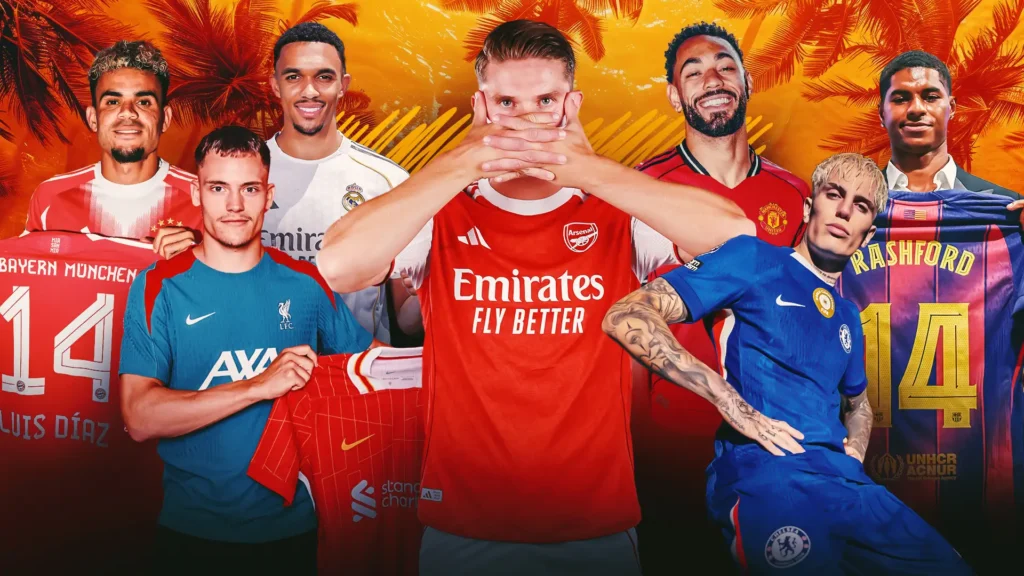
The football world never rests. Every month, clubs across Europe and beyond engage in high-stakes negotiations, completing deals that reshape squads, excite fans, and shift competitive balance. In this comprehensive, expert‑level analysis, we’re taking you behind the scenes of the Biggest Transfers This Month, explaining not just who moved but why these deals matter—from strategic implications to long‑term impact on clubs’ ambitions. Whether you’re a seasoned transfer market analyst or a casual fan hungry for context, this post offers insights you won’t find in simple transfer lists.
Drawing on verified sources and the latest transfer news, this in‑depth blog covers the most significant signings and completed deals, with explanations rooted in tactical needs, financial pressures, and club strategies. Our aim is not just to inform but to enlighten—providing a narrative that helps you understand how these transfers could redefine leagues and careers for years to come.
Why the Transfer Market Matters
The global football transfer market is now a multibillion‑dollar ecosystem, with clubs spending unprecedented sums to assemble competitive squads. According to the latest FIFA report, men’s professional football alone saw transfer fees hit a record $13.08 billion in 2025, reflecting an explosive growth in global demand for elite talent. Premier League clubs led both spending and receiving, demonstrating the financial pull of England’s top division. (Channels Television)
Transfers aren’t just about marquee signings. They influence tactical systems, fan engagement, commercial revenue, and even youth development pathways. A single acquisition can alter a club’s playing style, nearly redefine its identity, and sometimes deliver instant returns in performance and results.
Massive Signings in the 2026 January Transfer Window
Manchester City Top Spending with a €72m Signing
One of the Biggest Transfers This Month saw Manchester City F.C. activate Antoine Semenyo’s €72 million release clause from AFC Bournemouth, a deal that immediately impacted City’s attacking depth. Semenyo’s arrival was not just a statement signing; it was a strategic reinforcement aimed at bolstering attacking versatility in the Premier League’s title race. (Inside World Football)
City’s calculated spending reflects a broader trend: elite clubs leveraging financial strength to secure standout performers capable of delivering immediate impact. By targeting players like Semenyo early in the window, City attempted to integrate new signings ahead of pivotal fixtures, indicating an approach that values continuity and readiness.
Jørgen Strand Larsen’s Big Move
Another of the Biggest Transfers This Month involved Jørgen Strand Larsen, who moved from Wolves to Crystal Palace F.C. for around €49.7 million. This transfer highlights how even mid‑table clubs are willing to invest heavily in proven attackers to boost competitiveness. Strand Larsen’s technical prowess and physical presence offer Crystal Palace a focal point in attack, emphasizing that transfer strategy is not limited to top‑six teams alone. (Inside World Football)
Conor Gallagher and Brennan Johnson Deals
In the January window, Tottenham Hotspur secured midfielder Conor Gallagher for €40 million from Atlético Madrid, while Brennan Johnson moved from Tottenham Hotspur to Crystal Palace for a similar fee. These transfers reinforce the fact that even established Premier League clubs are fine‑tuning their squads mid‑season, reflecting tactical priorities such as creativity in midfield and attacking reinforcement under pressure. (Inside World Football)
Not Just the Top Tier: Mid‑Level Transfers That Matter
While headline deals grab initial attention, the transfer market’s backbone often consists of moves that shape squad depth and provide tactical solutions. Clubs like Fulham completed the €27 million capture of Oscar Bobb from Manchester City F.C.—a solid addition for a side aiming for Premier League survival and squad balance. (Wikipedia)
Similarly, AFC Bournemouth’s announcement of defender Alex Jimenez’s £21 million move from AC Milan (triggered by contractual conditions after the regular window) underscores how conditional deals and loan obligations continue to play an important role in squad planning. (TalkSport)

Transfer Strategy: Beyond Price Tags
The Biggest Transfers This Month are defined not only by fees but by strategic intent. Clubs invest in players who fit specific tactical systems rather than purely chasing reputation or popularity. For example, a club struggling with goal conversion might target a prolific striker whose playing style complements its tactical setup. In contrast, a team seeking defensive solidity will look for defenders capable of enhancing organization and resilience.
In this context, even deals that don’t break transfer‑fee records can be monumental for a club’s season trajectory. A mid‑season acquisition that transforms a team’s midfield control or defensive strength can be equally impactful.
Winter Window Trends: Premier League Dominance
The January transfer window statistics reveal that the Premier League once again dominated major deals. According to transfer analysis, seven of the top ten transfers involved Premier League clubs as buyers, reflecting England’s continued financial advantage and competitive allure. (Football365)
This dominance isn’t accidental. The Premier League’s global broadcast reach, commercial revenue, and competitive balance make it a magnet for talent. Players often see moves to England as career‑defining steps—not only due to financial incentives but also for exposure to the world’s most watched football competition.
Behind the Scenes: Negotiations and Timing
The process behind these transfers is as intricate as the deals themselves. Negotiations involve scouting assessments, performance analytics, medical evaluations, contract terms, and often complex sell‑on clauses. Clubs with sophisticated recruitment networks, equipped with analytics teams and long‑term scouting strategies, tend to navigate transfer windows more effectively.
One example of this complexity is conditional deals like Alex Jimenez’s move to Bournemouth, where playing time triggered a purchase obligation. These nuanced arrangements illustrate how clubs tailor transfers to manage financial risk while securing talent. (TalkSport)
Deadline day—the final hours before a window closes—is often the most frenetic period, with clubs rushing to finalize deals before paperwork deadlines. Rumors and last‑minute negotiations can dominate headlines, creating dramatic tension that resonates with fans worldwide. (Football Transfers)
Financial Context: Why Transfers Are So Big
The transfer market is not just about football; it’s also influenced by economics. Revenues from broadcasting rights, sponsorships, and merchandising empower clubs to spend more aggressively. Record aggregate spending worldwide—like the $13.08 billion total in 2025—reflects both economic growth and the sport’s global commercialization. (Channels Television)
Financial Fair Play (FFP) rules influence how clubs structure deals to remain compliant. This has led to creative contract terms, player swaps, loans with obligations to buy, and extensive use of add‑ons. These mechanisms allow clubs to spread costs, manage budgets, and remain competitive without breaching regulations.
Player Perspectives: What Transfers Mean to Careers
For players, a transfer can redefine their career trajectory. Moving to a club with a better tactical fit, stronger infrastructure, or greater exposure can elevate performance and market value. Players often leverage moves to more competitive leagues as stepping stones to international recognition.
However, transfers also come with pressures—expectations from fans, adaptation to new coaching philosophies, and the necessity to perform immediately—all of which require psychological resilience.
Read Also: Latest Injury Updates in Major Leagues: Comprehensive Insights & What It Means for the Season
The Impact of Transfers on Team Performance
Historically, smart transfers correlate with improved team performance. A well‑integrated signing can stabilize a struggling defense, add creativity to midfield, or provide scoring options that were previously lacking. Conversely, failed transfers—where players don’t adapt—can unsettle team cohesion.
In recent months, teams like Manchester City F.C. and Crystal Palace have used their acquisitions strategically, adding depth where needed and reinforcing areas of weakness. The effectiveness of these moves often becomes clear only several weeks into the season, as new signings adapt to tactical demands and league intensity.
Beyond Football: Transfers in Other Sports
While football dominates global transfer news, other sports also engage in player movements that capture attention. In basketball, for example, trades and free‑agency signings can dramatically alter a team’s championship prospects. American football’s NFL sees player trades and contract restructuring in ways similar to transfers, affecting team rosters and competitive balance.
Although the mechanisms differ, the underlying principle remains the same: acquiring talent that strengthens a team’s chances of success, whether through development, strategic fit, or immediate impact.

What to Watch Next: Upcoming Transfer Cycles
Even though the January window has closed in many leagues, rumors and preparations for the next major cycle in the summer are already underway. Clubs often start early approaches, build relationships with agents, and monitor performance trends long before windows open.
Reports suggest that clubs are preparing for significant summer activity, with some big money moves expected as teams reassess needs and seek reinforcements ahead of continental competitions and international tournaments. (The Transfer Tavern)
Conclusion: What Biggest Transfers This Month Tell Us About Football Today
The Biggest Transfers This Month offer a snapshot of modern football’s competitive and financial landscape. These deals are not isolated events—they reflect strategic planning, economic power, and the relentless pursuit of success at both club and individual levels. From high‑profile signings in England’s Premier League to nuanced conditional transfers across Europe, the market continues to evolve in complexity and ambition.
Understanding these moves requires more than knowing fees and names. It requires insight into tactical needs, club philosophies, financial constraints, and player aspirations. Transfers shape the narrative of football seasons, influence tactical developments, and connect fans with the ever‑evolving story of club ambition.
As we look forward to future windows, one thing is certain: the transfer market will continue to captivate audiences, fuel rivalries, and build the next generation of football legends—one transfer at a time.
Let this guide serve as your trusted, expert‑level resource on the Biggest Transfers This Month, equipping you with both context and depth far beyond simple transaction lists.
Find more helpful guides on Crunchy Greens at tophillsportcom.